
A business in Dammam, Khobar or Dhahran usually needs a website that does three jobs: convince a procurement team or a local customer that you are real and capable, show up when people nearby search for what you do, and turn that visit into a call, a WhatsApp message or a request for a quote. This guide to web design Dammam buyers covers what each Eastern Province sector should put on its site, how to make a bilingual B2B site work, how local SEO across the three cities really works, what online selling involves, and how to run the whole project with a provider in Riyadh without meeting in person.

In short:
- Much of the Eastern Province economy sells to other businesses, so many sites here need to read like a credible supplier profile, not a shop window.
- English matters as much as Arabic for industrial, logistics and contracting firms; plan both languages from the start.
- Local SEO is one accurate Google Business Profile plus genuinely useful pages, not a copy of the same page for every city.
- Selling online in Saudi Arabia means choosing a platform, payments, delivery and the disclosures the law expects before you design anything.
- A Riyadh-based provider can deliver for Dammam remotely if scope is written, reviews happen on a preview link and communication stays in one channel.
In this guide
What businesses in Dammam actually need from a website
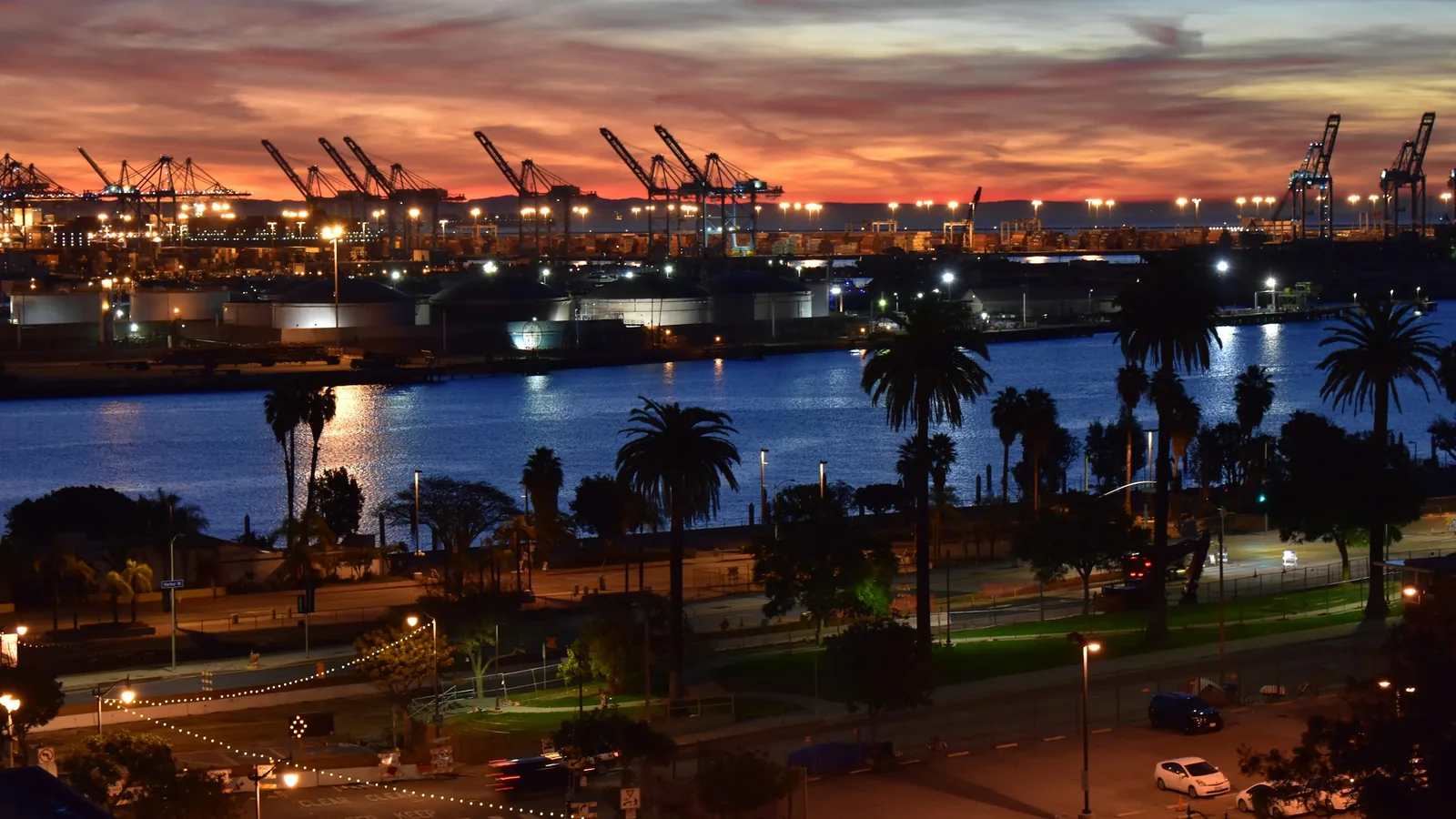
Dammam is the capital of the Eastern Province, and in daily life it works together with Khobar and Dhahran as one connected urban area. The region's economy leans heavily on energy, petrochemicals, ports, heavy industry and the long chain of contractors, workshops, transport companies and suppliers that serve them. Jubail's industrial city is a short drive north, and the causeway at Khobar links the area to Bahrain.
That mix shapes the website. A café in Khobar and a pipe fabrication workshop in Dammam's industrial area both need to be found on Google, but the workshop's visitor is very different: often an engineer, a buyer or a project manager, sometimes based abroad, checking whether you are a supplier worth adding to a shortlist. They want to see capability, certifications, equipment, past project types and a clear way to request a quote. They rarely buy on the spot.
So before talking about colours and layouts, decide which of these two jobs your site does first:
- Supplier credibility for business buyers: company profile, capabilities, sectors served, quality and safety documents, project types, request-for-quote form. Most industrial services, logistics and contracting firms sit here.
- Local demand capture for consumers: services and prices where possible, opening hours, location on the map, WhatsApp, booking or ordering. Retail, clinics, restaurants, car services and training centres sit here.
Many businesses need a bit of both, but one job should lead the home page. A site that tries to speak equally to a procurement officer and a walk-in customer usually speaks clearly to neither. If you want a broader introduction to how professional sites are planned, our page on web design for Saudi businesses is a good starting point.
Sector by sector: what Eastern Province sites need
For each sector below, the point is not a long list of pages but the few things a visitor checks before picking up the phone.
Industrial services, fabrication and plant support
Machining, fabrication, inspection, scaffolding and equipment rental are bought by people who know the work, so vague claims such as "high quality solutions" do not help. What does help:
- A capabilities page per service line, with materials, sizes, tolerances or capacities stated in plain numbers where you can share them.
- An equipment or facility page: workshop area, key machines, fleet, in-house testing. Real photos of your own yard beat any stock image.
- Quality, health, safety and environment information, with the certificates you actually hold and their scope. Never show a logo for one you do not hold.
- Project types and sectors served, described without naming clients unless you have their written permission.
- A downloadable company profile, plus your commercial registration and VAT details visible for buyers who need them for vendor files.
Our websites for factories and industrial companies page shows how these elements fit together.
Logistics, freight forwarding and transport
A forwarder, customs broker, trucking company or warehouse operator near the port competes on reliability and coverage. Visitors want to know, quickly, whether you handle their kind of cargo on their route. Useful pages include services by mode (sea, land, air, warehousing, customs clearance), routes and coverage, cargo types you accept, and a quote form that asks for origin, destination, cargo type, weight and incoterms, which saves both sides a round of emails. See websites for logistics and transport companies for a fuller page plan.
Contracting, MEP and fit-out
Contractors win work on track record and on trust that they will finish. The site should show completed project types with photos, the size range of projects you take on, your classification or registrations stated accurately, the trades you cover in-house versus through subcontractors, and the areas you work in. A gallery organised by project type is easier to scan than one long photo wall. Our contracting website model is a working example of this structure.
Retail, showrooms and trading companies
Showrooms for furniture, lighting, building materials, car accessories or electronics often get visitors who want to know three things: do you have it, roughly what does it cost, and where are you. A catalogue with product photos and "ask about this item" buttons that open WhatsApp with the product name filled in works well before a full store. Trading companies that sell to other businesses may prefer a product catalogue with a request-for-quote basket rather than public prices.
A buyer shortlisting suppliers spends seconds on your home page. Show what you do, for whom, and how to ask for a quote, before anything else.
Bilingual B2B sites: English is not an afterthought
In much of Saudi Arabia, an Arabic site with an English summary page is enough. In the Eastern Province, many business buyers, engineers and project managers work in English day to day, while owners, government contacts and local customers expect Arabic. A B2B site here usually needs both languages at full depth, not one language and a token translation.
What "full depth" means in practice:
- Every page exists in both languages, with the same information. A capability listed only in English is invisible to an Arabic search, and the reverse.
- Technical terms are checked by someone who knows the trade. Machine translation of terms like "hydrotesting", "cathodic protection" or "bonded warehouse" often produces Arabic that a site engineer would not recognise.
- Layouts are tested in both directions. Right-to-left Arabic and left-to-right English need separate checks for menus, tables, icons that point a direction, and forms.
- Each language version is linked to its pair so search engines show the right one. Google's guidance on localized versions says each language version must list itself and all other versions, and that the annotations are ignored if two pages do not point to each other.
- Forms work in both languages, including error messages, confirmation emails and the notification your team receives.
Google also notes that translated pages are only treated as duplicates if the main content is left untranslated, so a properly translated English version is not a duplicate content problem. Our guide to bilingual website design goes deeper into structure, fonts and switching between languages, and the company profile website pages article lists the pages a B2B profile site usually needs.
Local SEO for Dammam, Khobar and Dhahran
When someone searches for "AC maintenance Khobar" or "scaffolding rental Dammam", Google usually shows a map with a few businesses before the ordinary results. Nobody can promise you a position there, and anyone who does is guessing. What you can do is give Google clear, consistent information and give visitors a reason to choose you.
Start with one accurate Google Business Profile
Google explains that local results are based mainly on relevance, distance and prominence. Relevance is how well your profile matches the search, distance is how far you are from the person searching, and prominence reflects how well known you are, including reviews and links to your business from other websites. Google also states plainly that there is no way to pay for a better local ranking.
For an Eastern Province business that means:
- One profile per real location. Google's guidelines say not to create more than one profile for each location. If you have a branch in Dammam and another in Khobar with their own staff and signage, each can have its own profile. A profile for an address where you have no office goes against the guidelines.
- Service-area businesses hide the address. If you travel to customers, such as a pest control, maintenance or moving company, Google asks for one profile for your central location with a defined service area, and the address hidden from customers. You can list Dammam, Khobar, Dhahran, Qatif and Jubail as service areas without opening offices there.
- Your real name, not keywords. Adding "Best AC Repair Dammam Khobar" to the business name is not permitted and can lead to suspension. Use the name on your signage and documents.
- Complete and current details. Category, hours including Ramadan and holiday hours, phone, website link and real photos of your premises, vehicles and work.
- Reviews, answered. Ask satisfied customers for a review and reply to every one, including the critical ones, calmly and briefly.
Our Google Business Profile guide for Saudi Arabia walks through setup and verification step by step.
City pages done right, and done wrong
Many businesses serve all three cities and want to rank in each. The tempting shortcut is to copy one service page three times and swap the city name. Google's spam policies describe exactly this as doorway abuse: pages targeted at specific regions or cities that funnel users to one page. Its keyword stuffing examples also include blocks of text listing the cities a page is trying to rank for.
| Question | A useful city page | A doorway page |
|---|---|---|
| Why does it exist? | You have a branch, a team or real work in that city | Only to catch searches containing the city name |
| Content | Address or coverage, local team, local projects, directions, local hours | The same text as other city pages with one word changed |
| Photos | Taken at that branch or on jobs in that city | The same stock images on every page |
| Would a visitor miss it if it were removed? | Yes, it answers questions the main page does not | No, the main service page says the same thing |
| Risk | None; it helps visitors and search engines | Can be treated as spam and pull the whole site down |
If you have one office and serve the whole metro area, one strong service page that says clearly "we serve Dammam, Khobar, Dhahran and Qatif" with examples of jobs in each often does better than three thin pages. Add a separate city page only when you have something genuinely local to say.
On-site basics that support local search
- The same business name, address and phone number on the site, the Business Profile and any directories, written the same way.
- Page titles that name the service and the area naturally, such as "Industrial scaffolding rental in Dammam and Jubail".
- LocalBusiness structured data on the contact or location page. Google lists the business name and address as required properties, with phone, URL, geographic coordinates and opening hours recommended.
- An embedded map and written directions with landmarks people actually use, such as the nearest main road or interchange.
- A fast, mobile-friendly site connected to Google Search Console with a submitted sitemap, so you can see which local searches bring visitors.
Worked example: one contractor, three cities
Take an MEP maintenance company with one office in Dammam and teams working across Khobar, Dhahran and Jubail. A sensible plan would be:
- One Google Business Profile for the Dammam office, set as a service-area business covering the four cities, with the real company name and category.
- One page per service (HVAC maintenance, electrical maintenance, plumbing, annual maintenance contracts), each in Arabic and English, each mentioning the coverage area once in a natural sentence.
- A projects page with filters by service and city, where each project has its own photos and a two-line description.
- A Jubail page only if the company later opens a site office there or runs a dedicated industrial maintenance team; until then, Jubail projects live in the projects page.
This is slower than generating twenty city pages, but it builds something that holds up. For a full picture of search visibility, read how to get found on Google, and if you want help beyond the basics, our SEO service is quoted in writing for each project.
E-commerce web development in Dammam: where to start
Searches for e-commerce web development in Dammam come from two very different groups: retailers who want to sell to consumers across the Kingdom, and trading or industrial supply companies that want business customers to order spare parts, consumables or materials online.
Decide these five things before design
Platform
A hosted Saudi platform such as Salla or Zid gets you selling quickly with payments and shipping options built in. WooCommerce on WordPress gives more control over design, catalogue structure and integrations, and suits stores that are also company websites. Compare them in Salla vs Zid vs WooCommerce, and check each platform's official pricing page for current plans.
Payments
Card payments including mada, Apple Pay, bank transfer, and cash on delivery where your margins allow it. B2B buyers may need invoices with payment terms rather than card checkout.
Delivery
Same-day delivery inside the metro area with your own driver, courier companies for the rest of the Kingdom, and freight for heavy or bulky items. Each needs its own rule and price on the site.
Catalogue
Who will photograph products, write descriptions in two languages and keep stock levels current. This is where most store launches slip.
Compliance
Saudi e-commerce rules expect a store to say clearly who is selling, how to contact you, what the full price is, and what the return and refund policy is. Personal data from customers must be handled carefully too.
Our guide to e-commerce website development in Saudi Arabia covers requirements, steps and cost drivers in detail, and Saudi website legal requirements lists the disclosures and pages to plan for. For handling customer data, see the PDPL website compliance checklist. These are general guides, not legal advice; check official sources for your own case.
B2B ordering is not the same as a shop
An industrial supplier rarely needs a consumer-style checkout. More useful are customer accounts with company-specific prices, a quick-order form for part numbers, a request-for-quote basket and downloadable datasheets, usually built on WooCommerce or as a custom system. A catalogue with quote requests is a reasonable first step if a full store is too much for now.
Webnaa builds stores on WooCommerce through our online store design service, and designs stores on Salla and Zid through our Salla and Zid store design service. Both are priced by a written quote after we understand the catalogue and the payment and delivery setup.
Working with a Riyadh provider from the Eastern Province
Some owners prefer a designer they can meet in Dammam, which is fair. In practice, most website work happens on screens either way: you review designs on a link, send photos over WhatsApp and approve text in a document. What makes a remote project work is discipline, not distance. A Riyadh provider such as Webnaa can serve a Khobar business well if the process is clear.
What a well-run remote project looks like
1. A short call and a written brief
A phone or video call to understand the business, followed by a written summary: goals, audience, pages, languages, features and who supplies what. Our website brief template helps you prepare.
2. Price, scope and date in writing
Before any work starts, you should receive the price, what is included, what is not, and the delivery date. If it is not written, it is not agreed.
3. Content and photos collected in one place
Logo, documents, certificates and photos sent through one channel. Good phone photos of your workshop, fleet or showroom, taken in daylight and held horizontally, are often enough.
4. Review on a preview link
The full site is shown on a private link before launch. You click through it on your phone and computer, share it with partners, and send comments as a numbered list.
5. Launch and handover
The site goes live on your domain, Search Console and the sitemap are connected, forms are tested, and you receive dashboard access with a short walkthrough.
On your side, name one decision-maker who collects feedback internally and sends one list, keep everything in a single WhatsApp group or email thread, and ask for any added scope to come back in writing with its price before it is built. Our how we work page shows our own process step by step, and if your business is in the capital, the companion article on web design in Riyadh covers that market.
Web design Dammam checklist: choosing a provider
Whether you hire a freelancer in Khobar, an agency in Dammam or a team in Riyadh, ask these before you pay anything and expect written answers.
Questions about the work
- Have you built sites for businesses that sell to other businesses, and can I see live examples or models?
- Are Arabic and English both included at full depth, and who checks the technical terms?
- Who writes the content, and how many pages are included?
- Will I see the full site on a preview link before it goes live?
- How will you set up Google Business Profile links, Search Console and the sitemap?
Questions about ownership and running costs
- Is the domain registered in my company's name?
- What happens to the site files if I stop paying, and can I buy them?
- What does hosting cost after the first year, and what is included?
- Who applies security updates and takes backups, and how often?
- How are edits and new pages after launch priced?
Questions about money and timing
- Is the price final, and does it include VAT?
- What are the payment stages, and is there a refund if I am not satisfied with the design?
- What is the delivery date, and what do you need from me before the clock starts?
Warning signs
Ranking promises
Nobody can promise first place on Google for "contracting company Dammam". A provider who does is either guessing or planning shortcuts that can hurt you.
Domain in their name
Your domain is a business asset. If someone else registers it, leaving them becomes difficult.
One number, no scope
A price without a list of what is included means the missing parts arrive later as extra invoices.
For a longer list of questions, see how to hire a web designer. To compare written offers line by line, use our web design quote checklist.
How Webnaa works with businesses in Dammam
Webnaa is a website design service based in Riyadh, with no office in Dammam; we serve businesses across the Kingdom remotely. Our website design service starts from SAR 39 a month, with no setup fee and no long contract, and the price calculator prices your site by its pages and languages. For example, a 5-page WordPress website in Arabic and English is SAR 324 a month, paid in advance every 6 months or for a full year at 10% off. You can cancel renewal at any time with no cancellation fee, and your website stays live until the end of the paid period.
That WordPress website includes:
- A professional WordPress website with an easy dashboard, in Arabic, English or both.
- 5 pages, each in Arabic and English, with the content written by Webnaa from your business details.
- Hosting, SSL and a standard domain registered in your name.
- An inquiry or quote request form, photo gallery, map location, WhatsApp button and direct call number.
- A fast, mobile-friendly build, search engine setup with Google Search Console and a sitemap, a ready privacy policy and terms, and a printable QR code for your vehicles, brochures or showroom.
- Technical support, fixing technical faults, security and technical updates, backups and answers to your questions, all included at no extra charge. You edit the site yourself from the dashboard.
The preview link is sent within 24 hours at most from receiving all the information and content we need from you. If you do not like the design shown on the preview link during the design stage, a money-back guarantee applies, per the refund policy. A new page added after launch is priced as in the calculator and added to your subscription. New features such as an online store, bookings, online payment or integrations are priced in writing before any work starts.
From year two you pay only the monthly base. If you want to take the website independent, you can buy it for its value plus an independence fee, and the purchase includes a year of hosting and the domain registered in your name. Full details are on our pricing page.
Choose what you need, see your exact price
The price updates with every choice. No surprises, no hidden fees.
The calculator is off. Press the power button to start
Where will your website live: on a Webnaa address, or on a domain in your business name?
Who edits your website after launch? On static we edit it for you; on WordPress you edit it yourself from a dashboard.
How many languages will your visitors read?
How many pages does your business need? If you are not sure, five pages suit most businesses.
A subscription paid every 6 months or yearly that keeps your website with us, or buy the website in one payment and own it.
From Zoho, a global provider with data centres in Riyadh and Jeddah. More than 10 addresses are quoted separately.
A preview of your Eastern Province business website within 24 hours of receiving your complete content
Tell us what you do and who you serve, and review the full site on a preview link before it goes live.
Based in another city? Read web design Riyadh and web design Jeddah.
FAQ
Do I need a web design company based in Dammam?
Not necessarily. Most website work is done and reviewed online. What matters is a written scope, a preview link before launch, one communication channel and a provider who understands B2B buyers and bilingual content.
Should my site be in Arabic, English or both?
If you sell to industrial clients, contractors or international partners, plan for both at full depth. Consumer businesses serving local customers can lead with Arabic and add English where their customers need it.
Should I create separate pages for Dammam, Khobar and Dhahran?
Only if each page has genuinely local content, such as a branch, a local team or local projects. Copies of the same page with the city name changed can be treated as doorway pages under Google's spam policies. One strong service page with a clear coverage area is often the better choice.
Can my business appear on Google Maps in Khobar if my office is in Dammam?
If you travel to customers, you can set up a service-area Business Profile covering Khobar and other cities. Google ranks local results on relevance, distance and prominence, so a profile based in Dammam may appear less often for searches made deep inside Khobar. Do not create a profile for an address where you have no real office.
Summary
Good web design in Dammam starts with knowing your visitor. For industrial, logistics and contracting firms, that is often a business buyer who wants proof of capability in both languages and an easy way to request a quote. For retail and local services, it is a nearby customer who wants prices, hours, directions and WhatsApp. Local visibility comes from one accurate Google Business Profile and honest service pages, not copied city pages. If you sell online, settle the platform, payments, delivery and disclosures first. And whether your provider is down the road or in Riyadh, insist on a written scope, a preview link and one clear line of communication.
Sources: Google Business Profile Help: tips to improve your local ranking, Google Business Profile Help: guidelines for representing your business, Google Search Central: localized versions of your pages, Google Search Central: spam policies, Google Search Central: LocalBusiness structured data. Webnaa: pricing, how we work.