
If you run or manage a business in Madinah, your website has two very different readers. One is a visitor to the Prophet's Mosque, often abroad and planning weeks ahead, who wants prices, distances and a cancellation policy. The other is a resident or a local company comparing clinics, schools, contractors and date sellers. That is why any web design Madinah project should start with one decision: which of them is each page for? This guide covers what visitor-facing and local businesses need, what the Ministry of Tourism's rules expect from hotel and serviced-apartment websites, how to sell dates online all year, and how to handle Arabic and English when your own team works in both.
In short:
- Madinah has a visitor economy and a resident economy. Visitors decide before they arrive; residents decide after comparing. Plan your pages for the one you actually serve.
- Hotel and serviced-apartment websites carry written obligations under the Ministry of Tourism's accommodation regulations: trade name, licence number and class on every web page, true-to-life photos, and a price list in Arabic and English.
- Date farms and shops can sell all year, and win corporate gifting orders, once varieties, weights, packing dates and shipping are written down.
- Arabic comes first for most local customers; English is essential for visitor-facing pages. Add a third language only if someone will keep it up to date.
In this guide
Web design in Madinah: start with who reads the site
We will not quote visitor numbers or market sizes here; what matters for your website is how its readers behave. In Madinah one street can hold a hotel whose guests book from Jakarta or London, a date shop selling to both a visitor buying gifts and a family stocking up for the month, and a contractor's office whose clients never set foot near the central area. The same design rules do not fit all three.
If you are an expat manager or part of a foreign-owned company, it is easy to plan the website around how your head office thinks. Plan it around how your customers decide instead. This table sums up the differences that change a site's structure:
| Reader | When they search | Language | What they need first | What loses them |
|---|---|---|---|---|
| Visitor planning a trip | Weeks or days before travelling | Arabic, English or their own language | Price and what it includes, walking distance, cancellation terms | Out-of-date prices, photos that don't match reality |
| Visitor already in the city | Right now, often on foot | Their own, in a few words | Map pin, opening hours, a phone number | Wrong hours, a pin on the wrong building |
| Resident or family | When the need arises, with time to compare | Mostly Arabic | Experience, real examples, how to start | Generic copy that could be about any city |
| Company or project buyer | During a tender or supplier review | Arabic and English | Company profile, references, certificates, a quote form | No downloadable profile, no named contact |
Many businesses sit in two rows at once: restaurants, pharmacies and date shops serve visitors and residents on the same day. You don't need two websites for that. You need a home page that splits the two paths in the first screen, for example "Visiting Madinah?" and "Living in Madinah?", each leading to its own page with the details that reader needs.
Arabic first, English where it counts
Madinah is an Arabic-first city. Most residents, local suppliers and government-facing processes work in Arabic, so a business serving the local market needs excellent Arabic before anything else. English matters wherever visitors or international partners are involved: it is the shared language for many travellers from outside the Kingdom, and for hotels it is part of the rules, as the next section shows.
A quick way to decide is to sort your pages into three groups:
- Always in both languages: prices, booking, cancellation terms, how to get there and contact details, for any business that serves visitors.
- Arabic first: school admissions, contracting enquiries and content written for people living in specific districts.
- Optional third language: some hospitality and gift businesses receive visitors who read Urdu, Indonesian or Turkish, for example. One short, accurate page in that language can help. A page that nobody updates does more harm than no page.
When your team works in two languages
Bilingual teams run into a specific problem: the English version gets written by the manager, the Arabic version by whoever has time, and the two drift apart. Three habits prevent this. Keep one source of truth for prices and policies, and update both languages in the same sitting. Have every Arabic page read by a native speaker who knows your trade, not only a translator. And write each language for its reader rather than translating headings word for word; an Arabic-speaking resident and an English-speaking visitor search with different words.
On the technical side, give each language its own URL. Google's documentation recommends telling it about the localised versions of your pages with hreflang annotations, so searchers are shown the version that fits their language. A browser's translate button is no substitute: it gives your English content no URL of its own to appear in search. We cover structure, right-to-left layout and typography in our bilingual website design guide.
Hotels and serviced apartments: what the rules expect from your website
Hospitality is the clearest part of Madinah's visitor economy, and it is the sector where regulation shapes what goes on your website. The Ministry of Tourism's Regulations of Tourist Accommodation Facility define a facility as any place that provides daily accommodation for tourists for a fee, and their fee schedules cover hotels, hotel apartments and serviced apartments. The English translation published by the ministry includes several obligations that touch your website directly:
- Trade name, licence number and category or class on all electronic pages and websites of the facility, and the trade name and class on booking platforms (Article 23). Put them in the footer of every page, not only on the "About" page.
- Images that match the facility's actual condition whenever you publish or advertise (Article 23). Borrowed room photos are a compliance problem before they are a marketing one.
- A price list in Arabic and English that includes statutory fees and taxes, announced according to the ministry's controls (Article 25). For this sector, a bilingual price page is not optional polish.
- Clear information on services, prices, payment method and cancellation or amendment policies, plus a reservation voucher showing the stay, the prices and which services are free (Article 28).
This is a general summary, not legal advice. The ministry notes that its translation is for guidance and the Arabic text governs, so check the current regulations, or ask your adviser, before you finalise your pages.
What guests check before they book
- How far is it to the Prophet's Mosque on foot? Walk the route yourself and give the time in minutes, with a note on crossings and shade. "Near the Haram" on its own convinces nobody.
- What does the rate include? Breakfast, tax, how many people per room, extra beds for children, parking.
- How do I get there from the airport or the Haramain train station? A short arrival page, and whether you arrange transfers.
- Does it suit older relatives? Lifts, step-free access, bathroom layout and quiet at night.
- What happens if my travel dates change? Write the policy in short sentences with day-based examples.
Your website does not have to replace booking platforms. Start with a clear direct route: a request form with dates and guest numbers, or a WhatsApp button with a pre-filled message, followed by a written confirmation. When direct requests grow, an online booking and appointment system can show availability and prevent double bookings. The pages this sector needs are set out on websites for hotels and furnished apartments.
Transport, restaurants and gift shops serving visitors
A visitor already in Madinah reads very little. They open your site on a phone, usually from a Google Maps result, and want an answer in seconds. That changes the priorities:
Transfers and tours
List the routes you really run: airport or train station to hotel, or visits to landmarks such as Quba Mosque and Mount Uhud. Give vehicle type, seats and what the price covers, one page per route, and show your licence and payment options.
Restaurants and cafés
Put the menu on the page as text, not as an image or PDF, so it reads on a phone and search engines understand it. State real opening hours, Ramadan changes, family seating and delivery to nearby hotels. More on websites for restaurants and cafés.
Gifts, perfume and prayer beads
Visitors buy for family back home and worry about luggage weight. Say whether you deliver to hotels and whether you ship within the Kingdom or abroad, then show your best sellers with real photos and price ranges.
For a table-side menu that visitors open with their camera, see our QR digital menu service. Whatever you sell, check that the hours on your site match your Google profile on the first day of Ramadan and the Eid holidays; a visitor who walks across the city to a closed door does not come back.
Visitors decide before they arrive; residents decide after they compare. Give each of them their own path.
Selling Madinah dates online, all year round
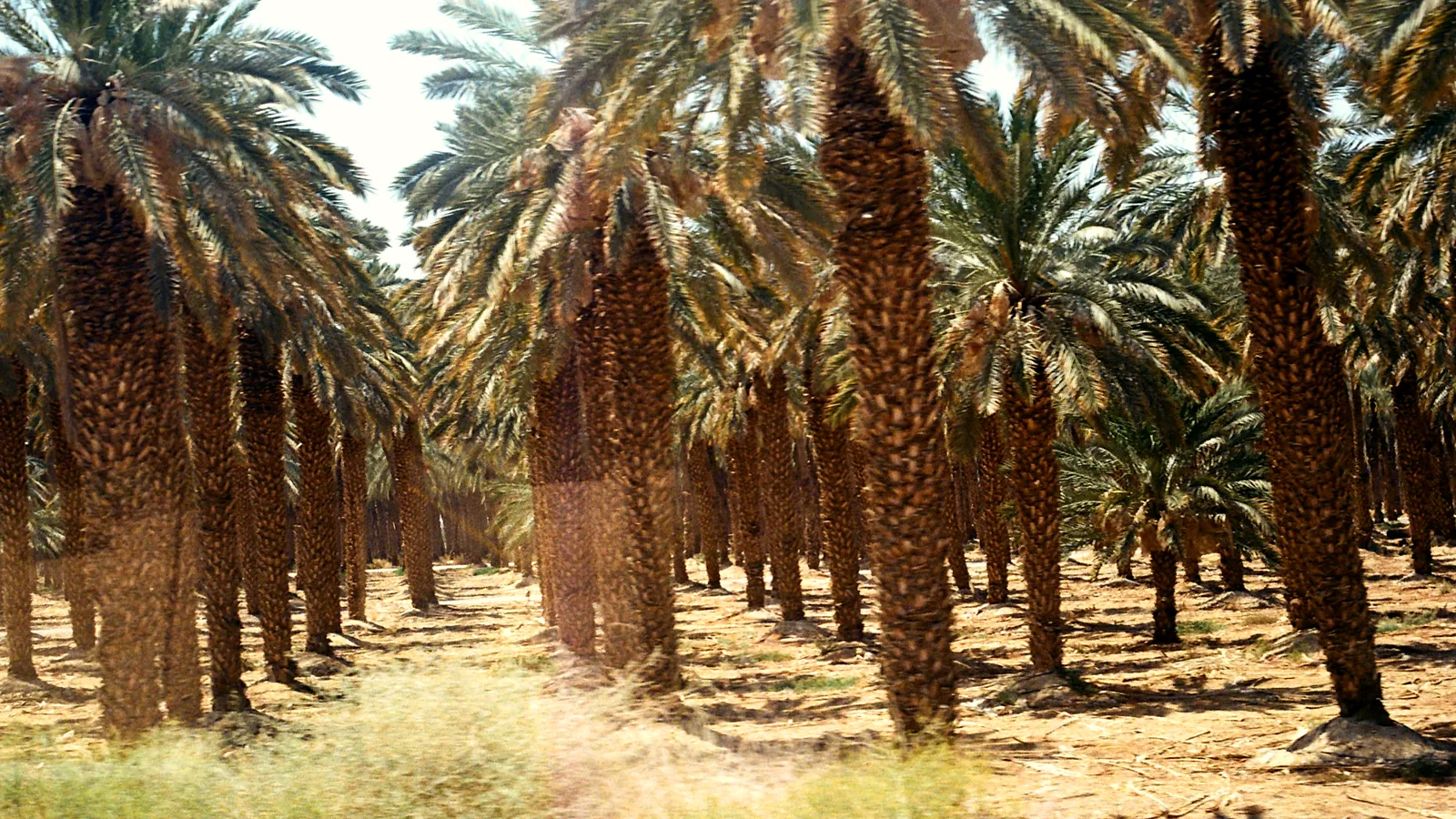
Madinah dates such as Ajwa, Anbara and Safawi are known well beyond the city, and demand does not stop when the harvest ends. Yet many farms and shops rely on a social media account alone. They miss the customer searching Google for "Ajwa dates delivery", and the HR manager at a company in Riyadh who needs a hundred gift boxes before Ramadan. A clear website opens three doors:
- Retail across the Kingdom: one page per variety with available weights, packaging, packing date, storage advice and typical shipping times to other cities.
- Corporate and occasion gifting: a separate page for gift boxes, the minimum order, whether you can add a company name, and a quote form asking for quantity, deadline and delivery city. Foreign-owned companies in the Kingdom often look for this in English.
- Wholesale and distributors: varieties available in bulk, a general description of capacity, your facility's certificates and a named sales contact.
Three mistakes come up again and again in this sector: stock photos instead of your own produce, vague lines like "the finest dates" with no weight or price, and health claims you cannot support. Write what you know for certain (variety, origin, weight, packing date, storage) and leave out the rest. Exporting is a separate subject with its own rules; if overseas buyers contact you, answer them case by case before you advertise it on the site.

A catalogue site or an online store?
If your orders are few and varied, a site that shows your range and takes orders through WhatsApp or a form is enough to start; you confirm price and shipping by hand. If orders are many and similar, an online store with card payments saves you hours each week. Our comparison of Salla, Zid and WooCommerce helps you choose a platform, and Salla and Zid store design is quoted in writing after a free consultation.
Clinics, schools and contractors: websites for the resident economy
Behind the visitor economy sits a large base of businesses serving the people who live in Madinah. Their customers rarely rush. They ask friends and relatives, then open your website to confirm. Your site needs to answer one question clearly: why you, and how do I start?
- Clinics and medical centres: doctors, specialties and working days, insurance accepted, how to book and exact location with parking. Visitors sometimes fall ill during a trip, so say whether you see walk-in patients and which languages your staff speak. Avoid treatment promises. See websites for clinics and medical centers.
- Schools and training centres: stages, curriculum, how fees are shared, admission dates, transport and the districts covered. International and bilingual schools need their English pages as complete as the Arabic ones, because many parents compare in English. See websites for schools and training centers.
- Contractors, fit-out and maintenance firms: completed projects with your own photos, the type, district and your role, plus a quote form that asks for scope, area and location. With development projects under way in the city, many firms deal with companies that ask for a profile before any meeting, so make yours downloadable in Arabic and English.
Getting found on the map
Visitors do not know district names, but they know the Prophet's Mosque, Quba Mosque and the train station. Give your official address, then add a landmark description, such as "eight minutes' walk from the Prophet's Mosque" if that is what you measured. Check that your map pin sits on your actual entrance, not the building next door.
Google says local results are based mainly on relevance, distance and prominence, and that there is no way to request or pay for a better local ranking. What you control is a complete profile with accurate hours (including Ramadan and Eid), real photos, replies to reviews, and details that match your website exactly. If your listing is duplicated, suspended or wrong, our Google Maps business profile service can set it right, and the full walkthrough is in Google Business Profile in Saudi Arabia.
Worked example: a corporate gifting page before Ramadan
A date shop in Madinah sells well to visitors and walk-in customers but gets almost no company orders. Its owner wants a share of Ramadan gifting from businesses in Riyadh, Jeddah and the Eastern Province, several of them foreign-owned with English-speaking buyers. Here is a realistic plan to start some weeks before the season:
Fix the offer
Choose three or four box sizes, the varieties in each, the minimum order and the last date you can accept orders for delivery before Ramadan.
Photograph your own boxes
Daylight photos of each box open and closed, on a plain surface. A phone camera is enough if the light is good.
Write one page in both languages
Each box with contents, weight and packing date; branding options; shipping cities and lead times; and how invoices are issued, which procurement teams always ask about.
Add a quote form, not a cart
Company orders vary by quantity and branding. A form asking for company, quantity, box type, deadline and city gets you the details to reply with a written quote.
Tell existing contacts
Send the page link to past company customers and suppliers by WhatsApp and email. A direct link to a clear page beats a long message with photos.
Review after Eid
Note which boxes sold, which questions came up repeatedly, and add the answers to the page so it works better next season.
The plan does not start with design. It starts with the offer, the photos and the facts a buyer needs, because those decide the order. Good design then arranges them so a procurement officer can read the page in a minute and forward it to a colleague. The same thinking works for a serviced-apartment operator preparing for the season: facts and photos first, layout second.
Webnaa and businesses in Madinah
Webnaa is a Saudi website design company based in Riyadh. We work with businesses in Madinah and other cities remotely: you contact us on WhatsApp, we agree the scope in writing, and you see your site before it goes live. Details of how we build company sites are on our website design service page. In every plan:
- We write your website's content for you, in Arabic, English or both, with a full interface for each language.
- We send you the design on a preview link within 24 hours of receiving your complete information, before it goes live on your domain.
- Hosting and SSL are included, with a domain in your name on every own-domain site.
- If you don't like the design during the design stage, our money-back guarantee applies.
- The consultation is always free, whether you need a company site, a booking system or a store.
Web design with Webnaa starts from SAR 39 a month for a one-page, one-language site on a Webnaa subdomain. The price of a site on your own domain depends on its type, languages and number of pages, and you can see it in seconds in our price calculator. Separate services such as booking systems, Salla and Zid stores and Google Maps profile repair are quoted in writing after the consultation. Full conditions are in our terms and conditions.
A website for your Madinah business
Work out your price by languages and pages, then send us your business details and we'll send the design on a preview link before launch.
Operating in more than one city? Read our guides to web design in Makkah, web design in Jeddah, website design in Riyadh and web design in Dammam.
FAQ
How much does web design cost in Madinah?
There is no Madinah-specific price. Cost depends on pages, languages, features such as booking or online payments, who writes the content and what is included after launch. At Webnaa prices start from SAR 39 a month, and you can price a site on your own domain in the price calculator.
Does a hotel website in Saudi Arabia have to show its licence number?
The Ministry of Tourism's accommodation regulations require the licensee to show the trade name, licence number and category or class on all of the facility's web pages and websites. Put them in the footer of every page, and check the current text of the regulations on the ministry's website.
Do I need an Arabic website if most of my managers speak English?
If any of your customers are local residents, local companies or Arabic-speaking visitors, yes. Madinah is an Arabic-first market, and Arabic searchers use Arabic words. Build Arabic and English as two complete versions with their own URLs, and have the Arabic reviewed by a native speaker.
Can I sell Madinah dates online across Saudi Arabia?
Yes. Start with one page per variety showing weights, packing dates and shipping, and a simple way to order by WhatsApp or a form. Move to an online store with card payments once similar orders become frequent, and add a corporate gifting page for seasonal company orders.
Is a booking platform listing enough for a serviced-apartment business?
Platforms bring bookings but not a direct relationship with guests. Your own site gives you a page under your name with your licence details, policies and a direct booking route. Most operators do best running both, with matching prices and details.
Does my web designer need to be based in Madinah?
No. What makes a project work is a written scope, a preview link before launch and clarity about what happens after it. Photos, though, should come from your real premises; take them yourself in daylight or hire a local photographer.
Summary
Web design for Madinah businesses comes down to knowing who you are writing for. Visitors decide before they arrive and want prices, walking distances and cancellation terms in their language. Residents and local companies compare at leisure and want experience, real examples and a clear way to start. Hotels and serviced apartments begin with what the accommodation regulations require on the website; date sellers grow by writing down varieties, weights and shipping and by courting company gifting; clinics, schools and contractors win trust with genuinely local detail. Keep Arabic first and English complete where visitors are involved, describe your location by landmarks people know, match your site to your Google profile, and have everything ready before the season rather than during it.
Sources: Ministry of Tourism: Regulations of Tourist Accommodation Facility (English translation, Articles 23, 25 and 28), Google Business Profile Help: tips to improve your local ranking, Google Search Central: tell Google about localized versions of your page. Webnaa service terms: pricing and terms and conditions. Sources checked in November 2026.